
Literati!
Seven words a writer should never use
But first, a history lesson.
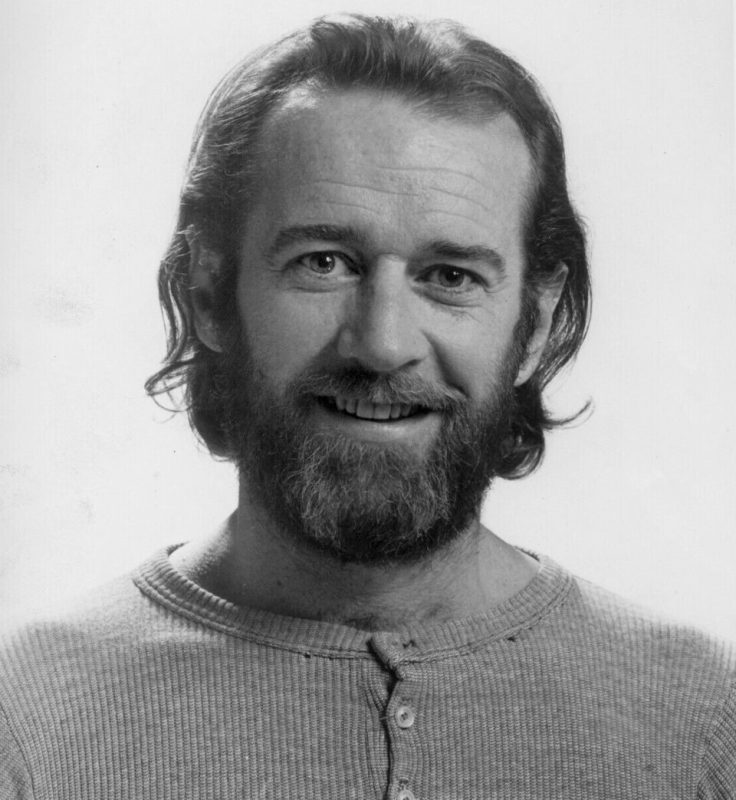
The “Seven Words You Can Never Say on Television” was a famous comedy routine by George Carlin, first performed in the early 1970s.
The seven words in the routine were:
- Shit
- Piss
- Fuck
- Cunt
- Cocksucker
- Motherfucker
- Tits
The routine became the center of a major U.S. free-speech case, FCC v. Pacifica Foundation, after a radio station broadcast it. The Supreme Court ruled that the government could regulate indecent—but not necessarily obscene—content on public airwaves during times when children might be listening.
Carlin’s point wasn’t just to shock audiences; he was exploring how society treats certain words as unacceptable while allowing discussion of the ideas behind them. The routine became one of the most influential pieces of stand-up comedy in American history. (wikipedia)
I remember part of the routine: “Sheriff…we’re gonna kill you. And we’re gonna kill you real slow. And Sheriff, after we kill you, we’re gonna kill your deputy.” Carlin thought kill was more obscene than the word (# 3) that he substitued.
And now…
Seven words a writer should never use
by his Moiness, the Editor-in-Chief
Love, awesome, nice, replied, thank-you-for-sharing, exciting, beautiful
“How can I tell you I love you, when cars love Shell?” (Jerry Rubin)
Usually the intent of the speaker is to express a personal favorable judgment of something. “I loved that movie,” implies approval. “I love my job,” implies satisfction.
The true meaning of love is a deep feeling germanated by a human connection. (AI will never love you but will compose a love letter on your behalf) When someone says they love you, is it you that they love, or just the euphoria you inspired? So when you use the word in your manuscript, consider a substitute that might be more precise. Honesty is, of course, the benchmark of all great literature.
Awesome
Paraphrasing Jerry, how can I look at a sunset over the ocean, when the sky turns all the colors of a polished abalone shell, and call it awesome when Burger King makes an awesome burger? Or amplifies the statement, totally awesome.
Nice
Ask someone what they had for lunch. If they answered “Food,” they have indeed answered the question, and told you nothing. How much could you learn about them as a character in your novel if they answered “I had the lobster bisque… I had a BigMac and fries and had them supersize it. The chef’s salad.” Each detail gives social status or degree of sophistication and lifestyle. “Have a nice day,” usually concludes a conversation “Will that be for here or to go?” Nice is a eunuch among adjectives. Nice time? Nice dinner? Nice smile? Almost any other adjective would be more descriptive: Deceiful smile, sardonic smile, genuine, inauthentic, Mona Lisa, forced smile.
Exciting
Exciting is the go-to word of a saleman. Don’t write like a saleman. “This is an exciting story!” How about writing an exciting the story and letting the reader decide for themeselves if it’s exciting? And the word is often followed by an exclamation mark. F.Scott Fitzgerald said an exclamation mark is like laughing at your own joke! (oops!)
Replied
Using replied to assign attribution in a dialogue should embarrass you. If someone in the conversation is replying to a comment or question, the word usually is redundant. We know they are replying, especially if it follows a question posed by the other person in the conversation.
Thank-you-for-sharing
Ok. I lassoo the phrase together to make a single word. It’s meaningless; it’s what the facilitator/therapist says to remind you it is now someone else’s turn to spill their guts out. Do you use words and phrases in your work that is a deflection to keep you from going deeper?
Beautiful
The word can apply to an animal, mineral or vegetable, an event or a process, but be cautious if you are using it as a feminine adjective to describe a woman, and, if you do so, is what you really mean is that she is sexually appealing? Leonard Cohen wrote, “And clenching your fist, for the ones like us who are oppressed by the figures of beauty, you fixed yourself, you said, Never mind, we are ugly but we have the music.”
If you do want to describe a woman’s allure, try something like this instead: When Alicia sashayed into the ballroom, men discretly glanced over the shoulders of their wives. What is unsaid is clearly understood by your reader.
I have only skimmed the implications of using these words; our webinars discuss topics such as this in depth. Sign up for our newsletter on the home page te receive announcments about upcoming webinars.
